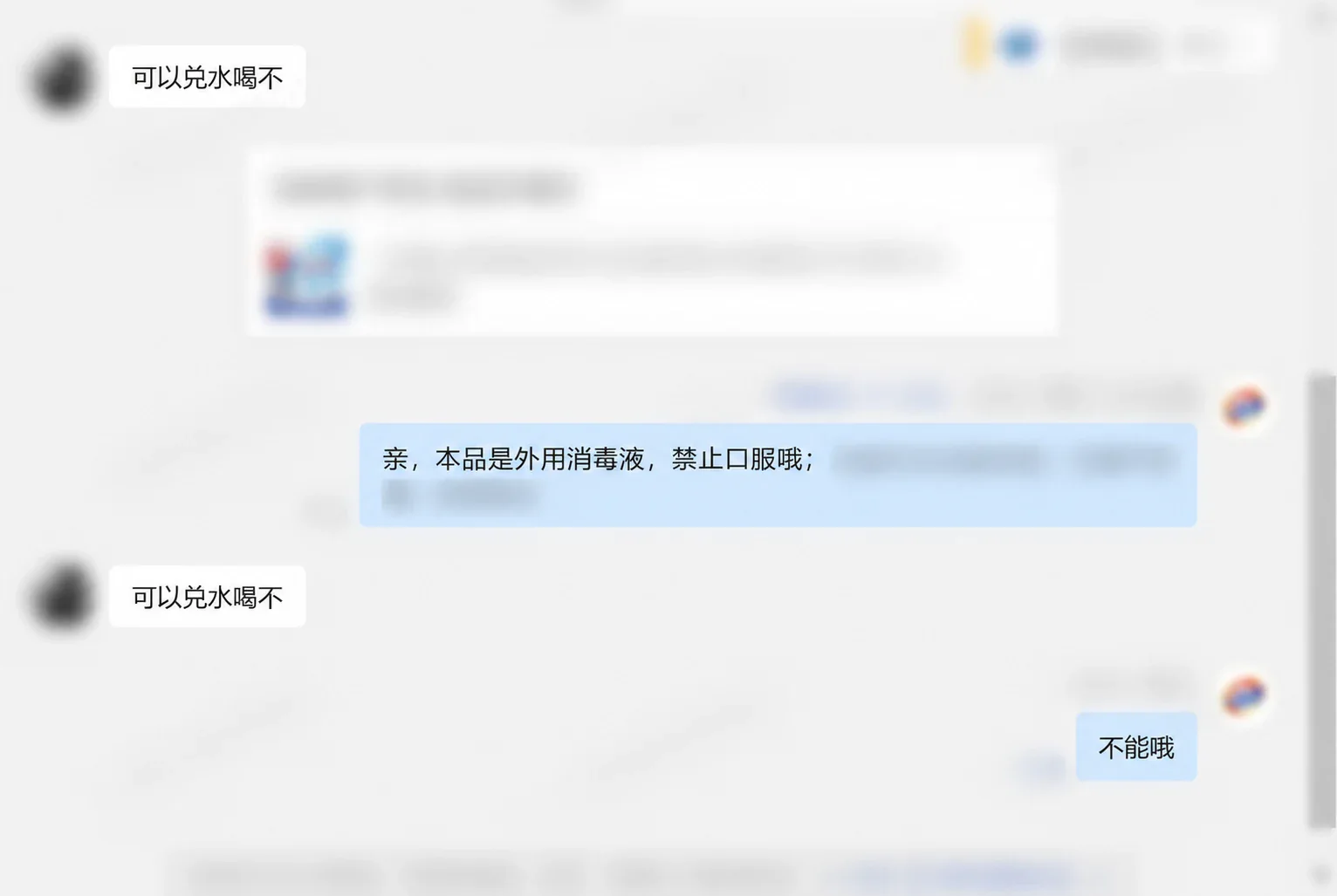
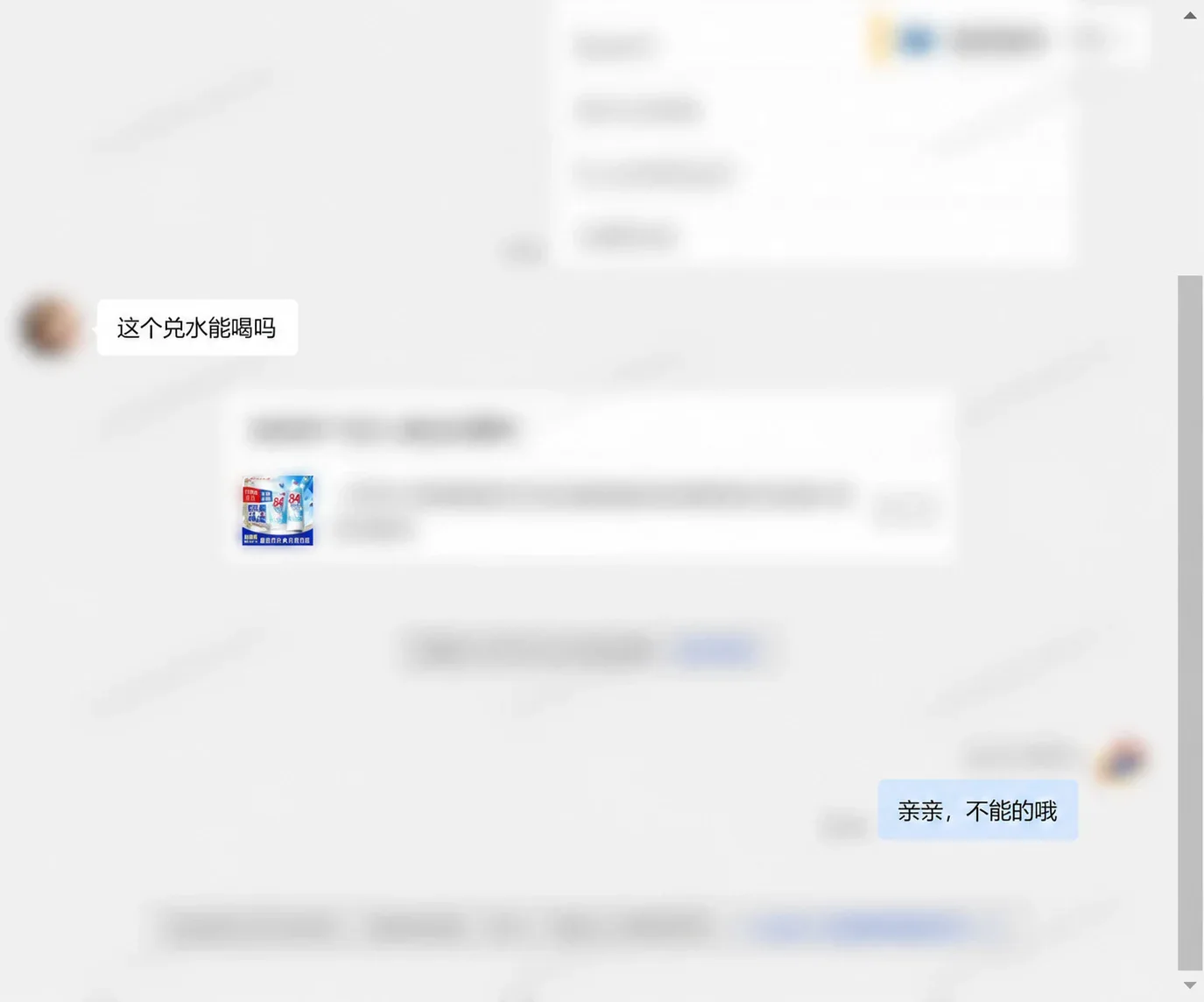
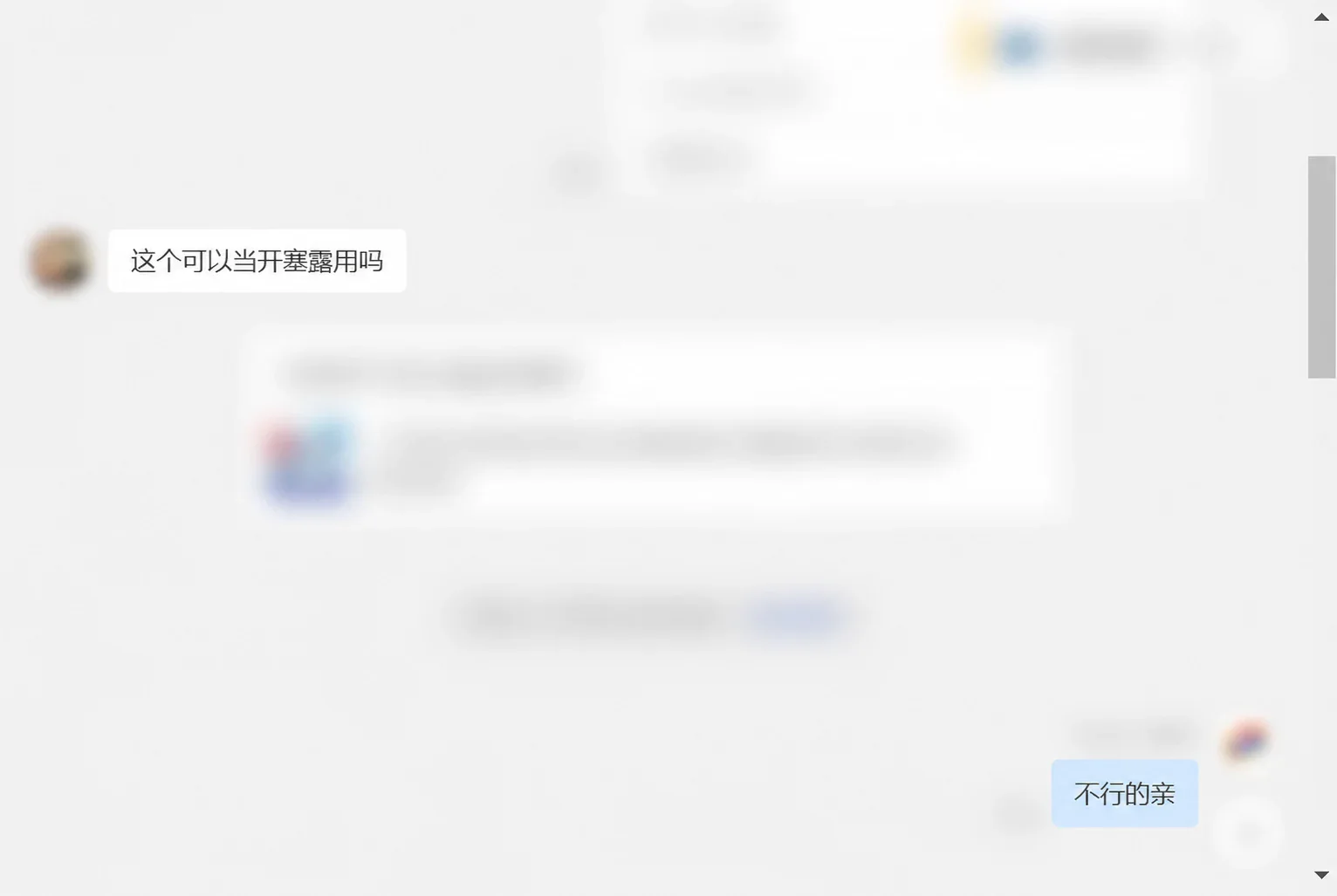
Several customer-service conversations received by 一品净 ask whether the 84 disinfectant can be drunk, drunk after dilution or used in place of a medicine. Customer service rejects drinking it and distinguishes disinfectant use from medicinal use. Different questions point to a shared misunderstanding: treating a product intended to disinfect objects as a treatment for the body. The conversations do not establish that ingestion occurred or provide a medical diagnosis. The disinfectant is not a drink, mouthwash or oral treatment, and customer-service replies cannot replace professional medical advice.
If an exposure is suspected, contact local emergency services or a poison centre promptly. Breathing difficulty, seizures, loss of consciousness or inability to wake the person require emergency help. Do not delay professional advice while waiting for symptoms or looking for a purchase record.
Do not induce vomiting or attempt to neutralise the product with vinegar or another chemical. Milk, egg white and large drinks of water are not universal antidotes. Follow the emergency professional’s instructions for the particular product, exposure and person. Never force fluids or food on someone with impaired swallowing, seizures or reduced consciousness.
If it is safe, keep the original container and label available and report the product name, ingredients and strength if known, when the exposure occurred and the person’s symptoms. Useful information should be gathered without delaying a call for help.
Keep cleaning and disinfecting products in their original containers, closed as the label requires and beyond children’s reach. Do not transfer them into beverage bottles or store them with food and drinks. Dilution, suitable surfaces, contact time and protective measures for 一品净 84 disinfectant must follow the label on the actual product.
Do not mix bleach with acidic toilet cleaners, ammonia or other cleaning products. Follow the instructions for each cleaning step rather than combining chemicals for a stronger effect. Clear packaging, timely customer-service warnings and sensible storage all help prevent misuse.