Following the Critical Chemicals Alliance’s (CCA) second assembly on October 8, discussions continue over how to implement its industrial recommendations. For downstream sectors such as detergents, the issues go beyond which chemicals might be considered critical: who bears transition costs, whether upstream environmental information can be verified, and how supply resilience can be balanced with product performance and affordability. These are different stakeholders’ policy requests, not new rules that companies must already follow.
The European Commission’s Alliance page lists four workstreams: critical molecules and production sites, trade, modernisation and investment, and lead markets. It also links to recommendations and import-trend monitoring reports. Identifying supply-chain vulnerabilities, tracking trade changes and coordinating investment are parts of this industrial work. They are not licences for individual detergent ingredients, nor do they mean that all formulated products belong to a single statutory list.
In its October 8 statement, the European Chemical Industry Council, Cefic, called for a move from analysis to implementation and a mechanism to track progress. It also stressed that the draft list of critical molecules is not the definitive list of critical chemicals in Europe. Reading industry recommendations, working drafts and formal policy decisions separately helps avoid premature claims in purchasing, formulation or public communications that something has already been designated or exempted.
Downstream organisations raise different concerns. The October 8 joint statement published by EuroCommerce, with signatories including Detergents Europe and DUCC, calls for prior assessment of the economic, administrative and consumer impacts of market-pull measures across the value chain. It asks whether formulators, distributors and retailers can obtain and verify environmental information generated several tiers upstream, and how new requirements would affect SMEs and consumer affordability. This is a policy position, not a forecast that any particular product will become more expensive.
Environmental organisations have also voiced a different assessment. The European Environmental Bureau (EEB) announced its withdrawal from the Alliance on October 1, criticising its governance, methodology and direction on health and environmental protection. It argues that criticality should be assessed through actual societal needs, supply vulnerabilities and safer alternatives. The debate includes both industrial competitiveness demands and challenges to the direction of the transition; one party’s view must not be presented as a consensus among all participants.
Jobs and skills form another strand. In its October 9 account of the assembly, industriAll Europe called for retaining strategic capacity, modernisation investment and the development of new capacity to advance together, with skills and jobs considered in industrial planning. These are the trade union federation’s priorities. Political commitments still require follow-up action: proposed investment, future lists or employment goals are not completed projects or achieved results.
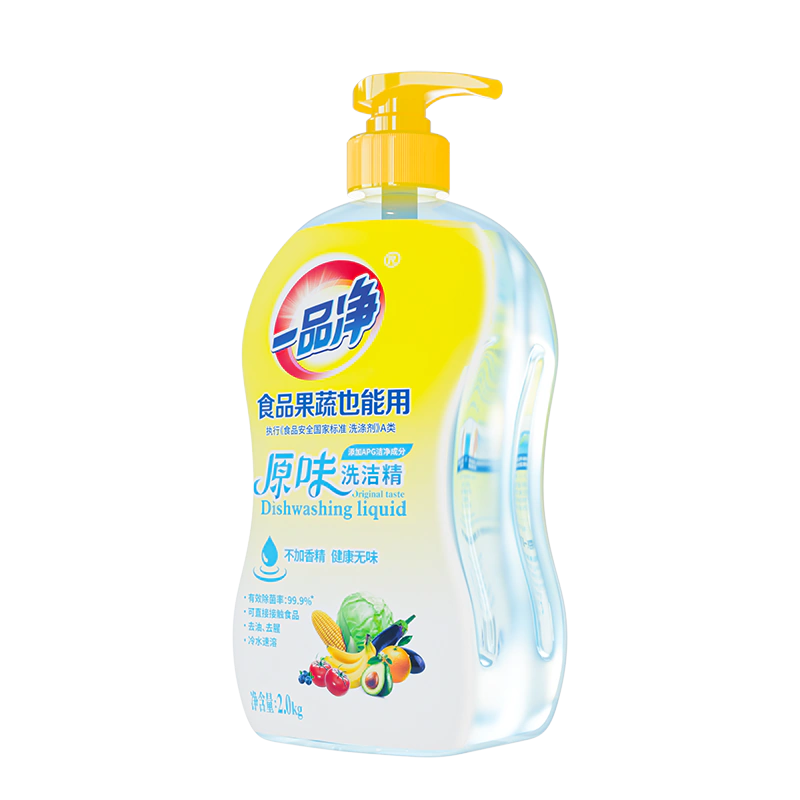
For cleaning-product brands, the purpose, size and conditions of use of an actual product still need to be clear. Yipinjing 2.0kg Original dishwashing liquid is for cleaning dishes; follow the instructions on the package purchased. Industrial Alliance discussions can help track raw-material and supply-chain conditions, but do not change the information consumers should check when using a bottle. Nor do they mean that Yipinjing has joined the Alliance, received EU certification or established a partnership with these organisations.
Developments to track separately include which recommendations become formal policy, how impact assessments cover downstream sectors, how responsibility for data is allocated, and whether measures have defined scope and implementation arrangements. Brands and manufacturers can maintain information and monitor changes according to their actual markets and supply chains. An industrial recommendation alone is not a basis for judging the compliance of every product, and measures still under discussion must not be described as uniform obligations already in force.