On 1 October 2026, the Danish Environmental Protection Agency published a survey of preservatives in cleaning and washing products, examining their presence in formulations and associated labelling. For the cleaning industry, practical questions include whether packaging, retailer webpages and ingredient information agree, and how ingredients that preserve a product differ from antibacterial or disinfecting claims made to users. The findings concern the selected samples, not the entire market.
The report summary lists 53 analysed products. Of these, 29 contained two or more preservatives; the most common combination was methylisothiazolinone (MIT) and benzisothiazolinone (BIT), found in 16 samples. The presence of combinations means that checking just one ingredient name is insufficient. These figures are not test results for any unspecified brand and cannot establish whether other products contain the same ingredients.
The news release for the same project reports less MIT use and more BIT use than in a similar 2018 survey; related institutions also recorded changes in contact allergy over that period. Such observations highlight the need to keep watching replacement ingredients and actual use after a preservative is substituted. They do not establish the cause of an individual consumer’s symptoms or mean that all cleaning products have become safer or more dangerous.
Differences between labels and webpages were another focus. The agency reported inconsistencies for 31 of the 53 products: 24 involved disagreement between labels and analytical findings, while another 7 involved differences between preservatives listed on packaging and retailer webpages. Both packaging and online descriptions help consumers identify products. When artwork, ingredients or webpages change, names and versions should stay aligned so that consumers do not receive contradictory information.
The European Commission’s guidance on treated articles covers mixtures and articles treated with, or incorporating, biocidal products. Certain biocidal-property claims or specific conditions in an active-substance approval can trigger labelling requirements. The Swedish Chemicals Agency further advises checking the correct product type, use and active-substance status; claims of biocidal effects also need supporting efficacy evidence.
Ingredient names alone do not determine intended use. In its Great Britain guidance, the UK HSE distinguishes primary from secondary biocidal functions: treatment to preserve a material is not the same as a product whose primary purpose is disinfection. This is a classification explanation under the British system, not a substitute for EU requirements. A preservative ingredient does not, by itself, justify promising that a product disinfects dishes, clothing or other surfaces.
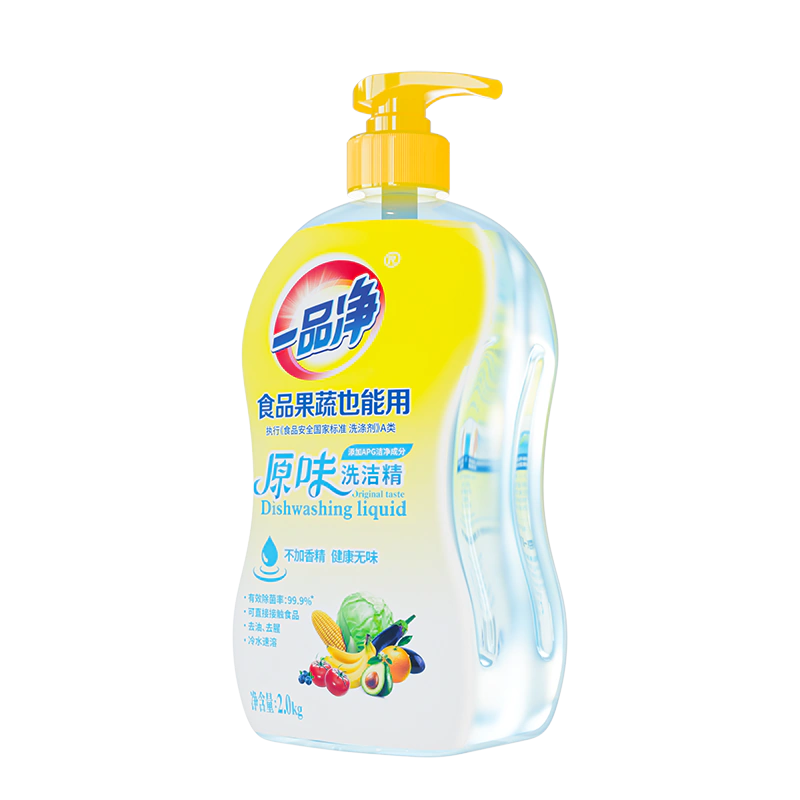
For everyday choices, Yipinjing 2.0kg original dishwashing liquid is a dish-cleaning product; check the intended use and instructions on the purchased pack. Product name, size, ingredient information and suitable uses are separate details consumers should confirm. The Danish survey cannot replace information for a particular product or substantiate foreign certification, participation by Yipinjing in the project, or additional antibacterial performance.
For brands, manufacturers and sellers, follow-up can focus on information maintenance: check webpages when packaging changes, check corresponding documentation when formulas change, and distinguish intended uses, labelling and applicable requirements when entering different markets. Preservative conditions of use, hazard information and performance claims are separate questions. A promotional “contains” or “does not contain” statement should not replace checking each of them.