Direct answer
Dishwasher salt light on: can table salt or Salt Cleaning dish soap go in the reservoir?
Do not put table salt, Salt Cleaning dishwashing liquid or other detergents in a dishwasher salt reservoir. It serves the water-softening system and requires dishwasher salt according to the model and water conditions. Detergent, salt and rinse-aid compartments are not interchangeable. A salt-related product name does not make it regeneration salt. Follow the model manual for filling, initial water volume and subsequent programmes. If detergent has already been added incorrectly, stop using the appliance and contact service.
First identify the compartment indicated. A dishwasher with a softener may have a separate salt reservoir, distinct from the detergent dispenser and small rinse-aid compartment. Bosch explains their different roles: dishwasher salt serves water softening, while rinse aid helps reduce water marks and improve drying. Their shared connection with washing results does not make the products interchangeable.
Read the full salt designation. Bosch specifies dishwasher salt only for the softener, not table salt, sea salt or similar substitutes. AEG requires coarse salt designed for dishwashers. Check both the product package and appliance requirements rather than relying only on sodium chloride in the ingredients or a bag of salt already at home.
Detergent is not a substitute for salt. The cited Miele model quick guide explicitly warns that powder or liquid detergent in the salt reservoir damages the softener. This compartment supports the softening system; it is not the place to wash grease directly off dishes. Do not try dishwasher powder, hand dishwashing liquid or homemade salt water there.
Clean up residues using the appliance procedure. AEG says to remove salt around the opening, close the cap and run the specified short programme without dishes to rinse away spilled salt. The cited Miele model instead has a Rinse salt programme. These instructions show why residue should not simply be left inside, but programmes and conditions vary between machines; do not copy another model blindly.
Initial water volume is especially model-specific. The cited AEG guidance specifies 1 litre on first filling, while the Miele quick guide specifies approximately 1.5 litres; the Bosch page describes filling the reservoir with water initially. Find your own model instructions, rather than averaging these quantities or choosing the largest. Do not automatically repeat first-use steps during every refill.
Also check softener settings when using combination tablets. AEG still advises replenishing the salt reservoir as instructed, particularly in hard-water areas. That is not a universal fixed-dose rule for every machine and water supply. Use the hardness setting, indicator and manual to determine whether and when to refill, rather than assuming extra salt means cleaner dishes.
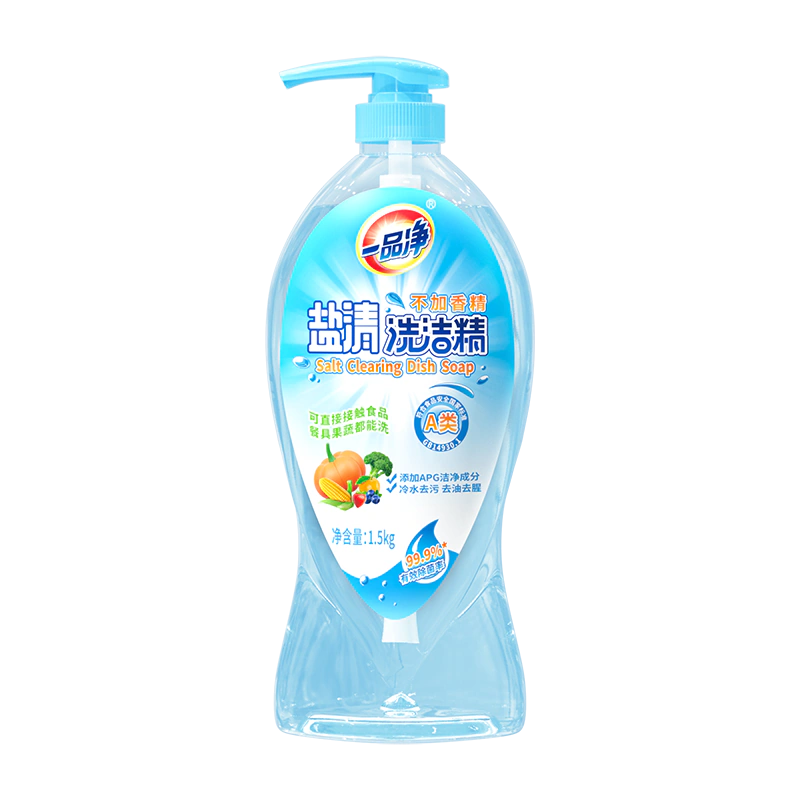
Yipinjing Salt Cleaning dishwashing liquid is a dish-cleaning product to be used according to the purchased package. Its salt-related name does not make it dishwasher salt or override the prohibition on detergent in the salt reservoir. Handwashing dishes and maintaining an appliance softener are different tasks; sharing a kitchen does not justify putting a product into another appliance inlet.
If an unsuitable product has already entered the salt reservoir, pause operation, note the machine model and product involved, and follow the manual or service guidance. Do not mix in other cleaners to flush it away or improvise disassembly and cleaning without model-specific confirmation. Keep products in their original packages and store dishwasher salt separately; recheck the compartment and product before refilling.