
Social-responsibility reporting should avoid two common problems: slogans without verifiable records, and one historical action rewritten as an ongoing commitment in the present tense. Issue 384 of the China Cleaning Industry Association bulletin, published in August 2019, preserves a comparatively complete public record of one Yipinjing poverty-relief donation, including participants, items, quantity, stated value and recipient area.
The association bulletin names Unilever, Whealthfields (Guangzhou) Daily Necessities Co., Ltd. and Tangshan Yipinjing Daily Chemical Factory among the participating companies. It records Yipinjing’s voluntary donation as 20 cartons of underwear soap and children’s hand wash, with a stated value of RMB 7,123, for residents of Zhengxi Village, Haitang Town, Ganluo County, Liangshan, Sichuan. This article uses only the figures explicitly stated in the bulletin and does not infer beneficiary numbers, product effects or later outcomes.
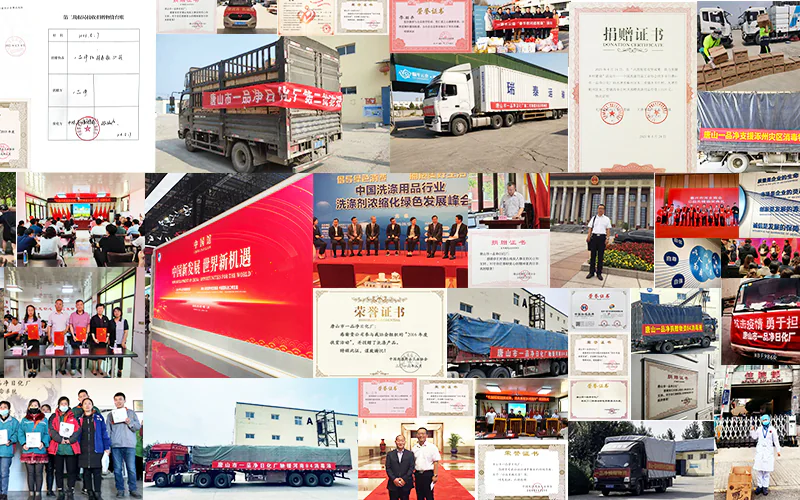
EPHYON’s previous website also published a company item about the same activity, titled “China Cleaning Industry Association council member Tangshan Yipinjing Daily Chemical Factory actively participates in a poverty-relief donation.” The two sources refer to the same event but serve different evidentiary roles: the association bulletin is the independent event record, while the EPHYON page preserves the brand’s own historical account.
The activity took place while poverty-relief work in Liangshan was still being advanced. A later Sichuan Provincial Government summary describes 2019 work covering social-security support, participation by social organisations and targeted assistance. In the same year, the National Development and Reform Commission documented broader efforts to involve social forces in poverty alleviation in Liangshan. These government sources explain the historical setting; they do not replace the association’s record of Yipinjing’s specific donation.
Ganluo County was also a focus of public assistance programmes at the time. A 2019 Ministry of Education record on Sichuan University’s targeted work in Ganluo describes assistance involving housing, industry, education and healthcare. It does not concern Yipinjing or this shipment to Zhengxi Village, but it helps explain why Ganluo appears across records from different assistance programmes.
Enterprise poverty-relief donations in 2019 also sat within an explicit national policy environment. That year, the Ministry of Finance, State Taxation Administration and State Council Leading Group Office of Poverty Alleviation and Development published a policy on pre-tax deduction for qualifying enterprise donations. It is cited only as historical context. This article has no evidence about how Yipinjing treated this shipment for tax purposes and makes no claim on that point.
Re-editing this older record into the social-responsibility section is not an attempt to manufacture freshness. It creates a traceable responsibility archive. The accurate statement is that public records document Yipinjing’s participation in one industry-association-organised poverty-relief donation in 2019. The record does not by itself prove that the same programme continues today, nor does it establish product effects, beneficiary testimonials or long-term social impact.
Future responsibility reporting will follow the same method: prioritise the recipient, date, items, quantity and public source. Where recipient confirmation or an independent record is unavailable, the material will remain identified as a first-party brand archive rather than being expanded into an independent fact. Genuine action does not need exaggeration; clear boundaries are part of credibility.