A household-cleaning manufacturer’s technical depth cannot be established by saying only that it “values R&D.” Named people, institutions and dates provide stronger public evidence. The National Public Service Platform for Standards currently lists Liu Haiying among the members of TC395. A public committee record from the China Cleaning Industry Association further identifies Tangshan Yipinjing Daily Chemical Factory as her employer and gives her role as chief engineer and engineer.
TC395 is the National Technical Committee on Detergents and Disinfectants for Food Appliances. The national standards platform states that its scope covers food-use cleaners, disinfectants and drinking-water treatment agents, under the establishment and guidance of the China National Light Industry Council. The platform also records GB/T 24691-2022, Fruit and Vegetable Cleaning Agent, as administered and implemented through TC395. The boundary matters: committee membership shows participation in standardisation work; it does not mean EPHYON drafted every standard on the platform or that any product automatically complies with one.
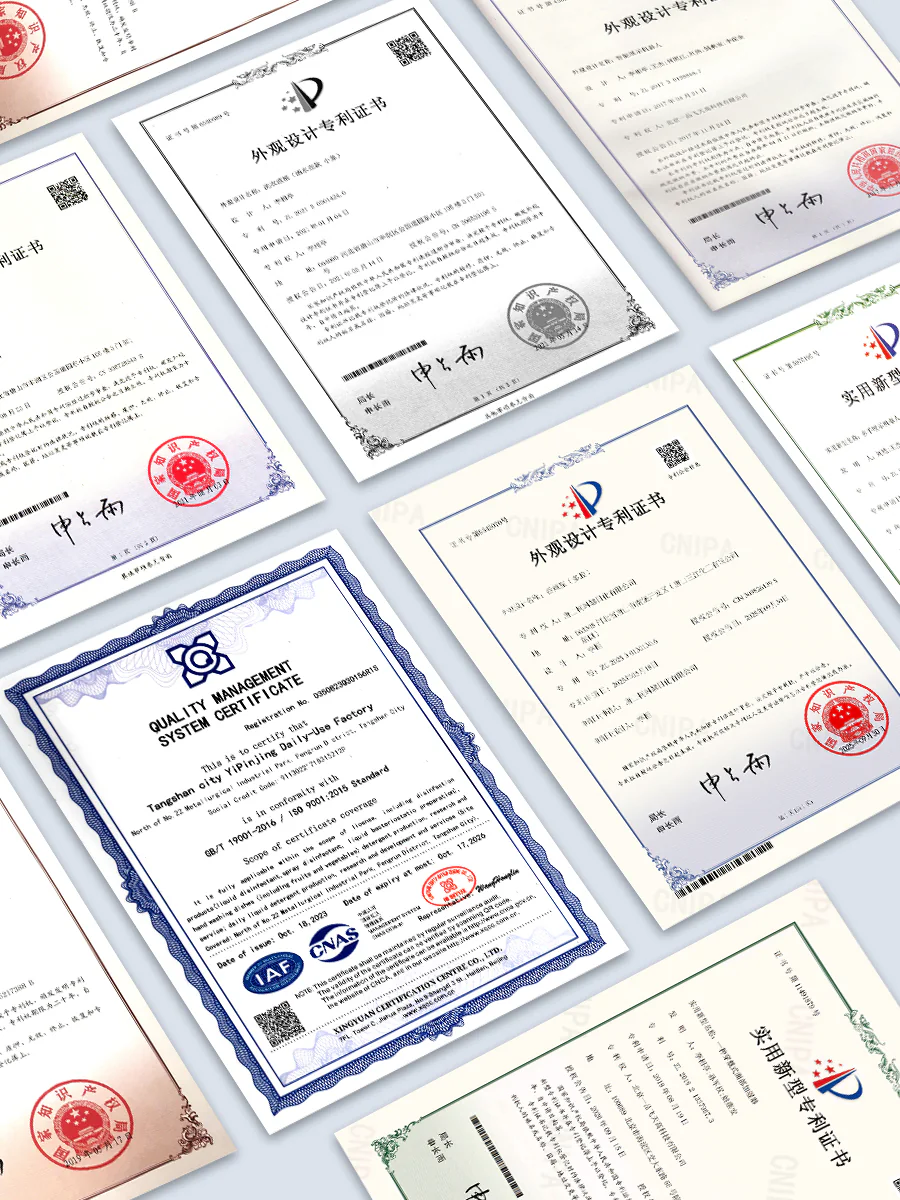
EPHYON’s previous website published a company notice stating that chief engineer Liu Haiying had been re-elected to a new committee term. That first-party item preserves the company’s own account of the milestone. Cross-checking it against the national standards platform and the association committee list provides independent public support for the core identity. This article therefore keeps external institutional records as the main evidence rather than asking a brand statement to carry the whole claim.
A second public record dates from 2019. During the 39th industry annual meeting, the China Cleaning Industry Association named 18 “advanced technology workers,” including Zhao Huafang, identified as technical centre manager at Tangshan Yipinjing Daily Chemical Factory. The record supports the person, employer and recognition announced by the association that year; it should not be expanded into undisclosed patent counts, formulation results or R&D outcomes.
Standards themselves change over time. The National Health Commission’s food-safety standards catalogue records GB 14930.1-2022, National Food Safety Standard—Detergents, as the replacement for the 2015 edition. Standardisation is therefore not a one-off honour but an ongoing process of tracking scope, version and implementation dates. Participation in industry standards work may form part of a company’s technical culture, while each product must still be checked against its own label, declared standard, test evidence and intended market.
The China Cleaning Industry Association’s public council list also includes Tangshan Yipinjing Daily Chemical Factory and Li Xiangting, providing another independent record of the company’s industry identity. Taken together, these sources do not justify saying that “all EPHYON products are certified by a national technical committee.” The supportable conclusion is narrower: public records show sustained participation by EPHYON technical personnel in industry standardisation and technology exchange.
For an OEM or ODM customer, the practical value of this history is to ask better questions: which standard version applies, who reviews formulation changes, how labels map to test documents, and which changes after sample approval trigger reassessment. EPHYON’s public contract-manufacturing service page provides a route to begin that discussion; final requirements still depend on the product, market and current documents.