The EU CLP arrangements for new hazard classes reach a date that requires careful attention to scope: 1 November 2026. Both the Swedish chemicals authority’s annual reminder and the Dutch Ctgb guidance identify this substance-classification milestone. It is not a notice requiring all finished cleaning products to be relabelled or withdrawn on the same day. First distinguish substances from mixtures and establish whether they were already placed on the market.
Ctgb lists 1 May 2025 as the application date for new substances, with a transition until 1 November 2026 for substances placed on the market before that earlier date. Mixtures follow another timetable: the relevant new requirements apply from 1 May 2026, while mixtures already placed on the market before then have a transition until 1 May 2028. Read the product category and market-placement conditions together, rather than selecting only the nearest date.
These new classes were not first announced in November 2026. The European Commission’s announcement of 20 April 2023 already described the rules entering into force, covering endocrine disruption and properties such as persistence, bioaccumulation or mobility in the water cycle. The present issue is a transition point under previously established rules, not a new measure announced today.
Nor do the new classes impose the same conclusion on every substance. Guidance from IFA, part of the German Social Accident Insurance system, distinguishes endocrine-disruption classification for human health from classification for the environment and notes that these can coexist with other hazard classifications. Whether a substance meets a class requires the relevant information and criteria; the name “cleaner” cannot determine a specific formulation’s classification.
In cleaning-product supply chains, classification of an ingredient substance and classification of the final mixture must be addressed separately. Labels and section 2 of safety data sheets communicate hazard information, but an ingredient’s classification cannot simply be copied to the finished product without assessment. When suppliers update information, check substance identity, formulation version and the product actually supplied before the responsible personnel review applicable requirements.
Do not put every CLP amendment on the same timetable. The Commission’s overview also discusses online hazard information, label readability and refill sales. These issues relate to the new hazard classes but are not the same transitional arrangements. Likewise, Ctgb’s authorisation procedures for plant protection and biocidal products are not a procedural checklist for every ordinary detergent.
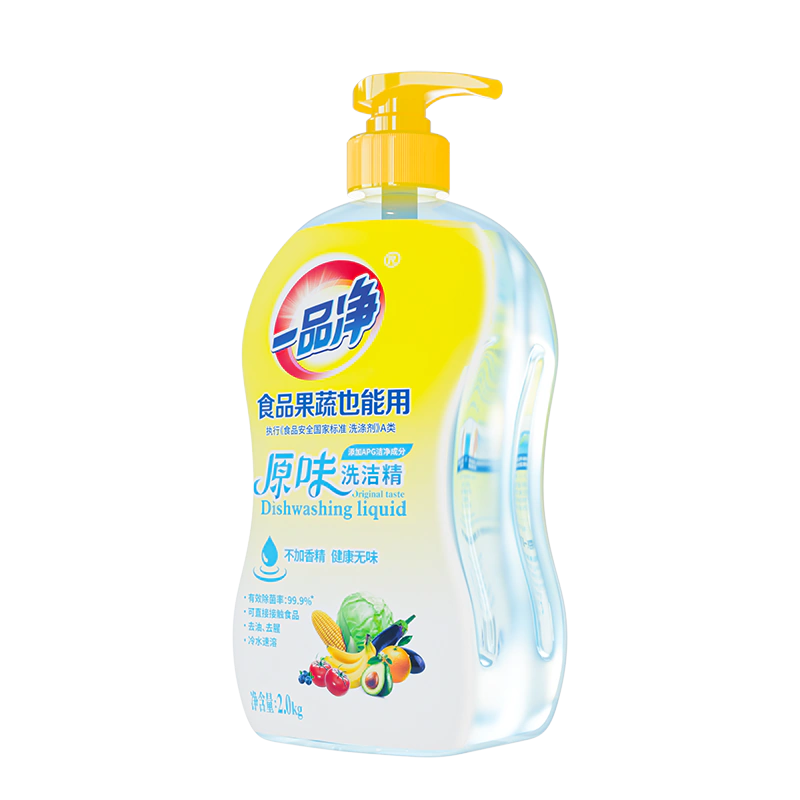
For consumers, understanding a product still begins with its correct name, pack size and purpose. Yipinjing 2.0kg original dishwashing liquid, for example, is for cleaning dishes; check the purchased pack when choosing and using it. Explaining an international classification system neither establishes EU certification for this product nor makes a new hazard determination about its formulation. Everyday use and compliance in a particular overseas market are separate matters.
For a specific project, check the formal rules for the destination market, the date of market placement and current product information. Information needed by the brand owner, manufacturer and importer should refer to the actual product and version. Separating substances from mixtures, and entry into force from the end of a transition, prevents a prominent date from obscuring the conditions that really need checking.