How can the cleaning performance of hand-dishwashing liquids be compared meaningfully? Public fitness-for-use discussion documents from the European Commission Joint Research Centre (JRC) detergent revision project offer a useful perspective: before reading the result, identify the task, the comparator and the test conditions. These discussion documents do not establish that a new regulation has taken effect.
The European Commission’s cleaning-product Ecolabel page lists hand-dishwashing detergents and dishwasher detergents as separate product groups. The corresponding JRC revision project covers six groups of detergents and cleaning products and includes a fitness-for-use subgroup. For purchasing and sampling, this is a reminder that products used differently should not be ranked directly on one score sheet simply because both are described as cleaning products.
Document status matters too. The JRC document directory includes 2025 drafts of the third technical report and fitness-for-use discussion material, with draft labels retained. An estimated project date is not a formal decision or implementation date. Discussion material can help explain test design, but is not an already implemented uniform product threshold.
For hand dishwashing, first match the reference product to the cleaning task. Everyday grease, dried food residues and different dish surfaces pose different challenges. The project’s discussion material addresses reference products, test conditions and reporting separately. A practical implication for sample discussions is to define the task before choosing a comparator, rather than combine results from different tasks into an unrestricted claim of stronger cleaning.
When reading a result, ask about dose, water conditions, soil and the operating method. Changing the conditions may change the question the result answers. Foam height or a single before-and-after photograph can illustrate an observation, but cannot alone describe performance in every everyday use. Evaluation should stay within the intended use covered by the test.
The reliability of a report and the scope of its conclusion are related but distinct. ISO’s introduction to ISO/IEC 17025 focuses on laboratory competence and valid testing and calibration results. This does not mean a product has earned an Ecolabel, nor does it replace information about the sample, method and result. Explain separately who performed the test and what that test can demonstrate.
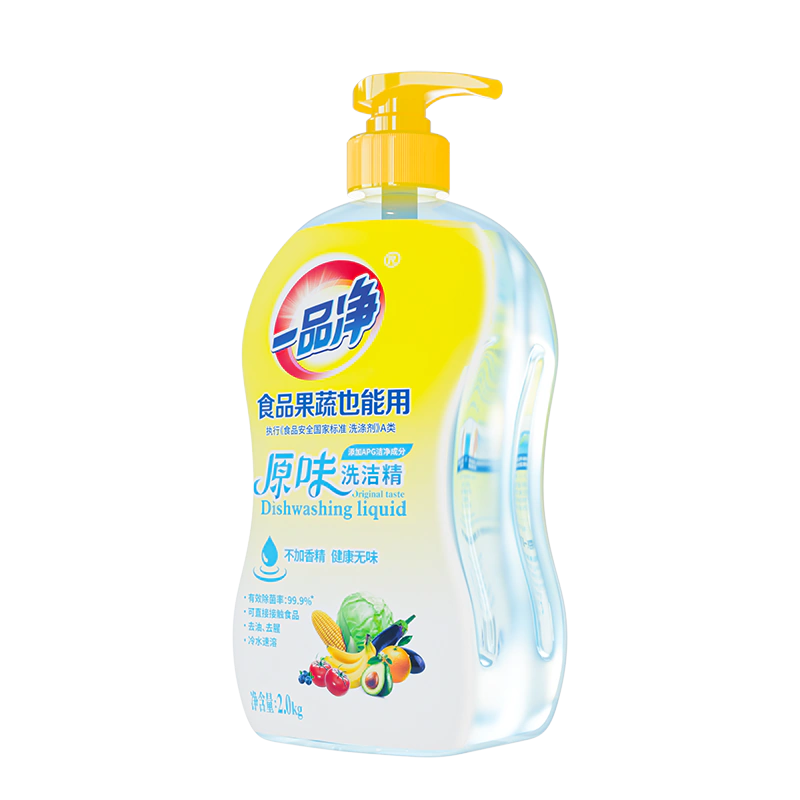
In cleaning-product ODM projects, these questions belong early in sample discussions. 一品净’s formulation-development service covers product requirements, dosage forms, target markets and samples. Agreeing on evaluation methods and documents for a defined task helps everyone understand sample differences. This service connection does not imply an EU Ecolabel award or guarantee compliance in any overseas market.
A useful comparison of hand-dishwashing liquids is more than an attractive number: the intended use, comparator, conditions and report conclusion should correspond. Once the method is clear, it is easier to judge which choices the result supports and which other situations need separate consideration.