Ireland’s Health and Safety Authority (HSA) brings safety data sheet (SDS) delivery into focus at wholesale, retail and online supply points. Its reminder concerns businesses supplying relevant chemicals to professional users, including retailers supplying tradespeople. For the cleaning-products supply chain, the question is not only whether a file exists, but whether the buyer receives the file matching the product in time. This is a reminder of existing requirements, not a new law taking effect this November.
The HSA says inspectors have noticed gaps in SDS distribution in wholesale and retail settings. Electronic delivery can use a direct link to the relevant file; a QR code on the product label should also lead directly to the relevant SDS. Sending users only to a website or directory containing all SDSs is not equivalent to meeting the delivery requirement described on that page. Whatever medium is used, recipients need the correct document for the supply concerned.
Timing matters too. The HSA reminds suppliers to provide the SDS with or before supply, either with the goods or separately by post or email. Revised versions should also be provided to recipients supplied with the relevant product during the preceding 12 months. Businesses can therefore check whether orders, document links and revision dates correspond, rather than treating a file stored internally as evidence that a customer received it.
The audience must not be omitted. This HSA reminder addresses professional users and explicitly distinguishes consumers, including DIY users. Buying an ordinary household product does not automatically place a consumer under the same SDS delivery requirements. The HSA’s broader guidance also distinguishes hazardous substances, hazardous mixtures and other specified circumstances; some mixtures not classified as hazardous may require an SDS on request. This does not justify classifying every cleaning product as hazardous.
REACH provides the existing framework for chemical information and safety responsibilities, while CLP communicates hazards through classification, labelling and packaging. An SDS gives more detailed handling, storage and risk-management information. Labels and documents should be consistent, but are not interchangeable media. HSA guidance requires the appropriate market language, 16 prescribed headings and preparation by a competent person.
After delivery, workplaces still need to use the information. The HSA’s 2023 information sheet describes using SDSs for risk assessment, making them accessible to relevant employees and checking revision dates against label information. New hazard or risk-management information, or relevant authorisation or restriction changes, may trigger updates. Leaving an old file in a directory is not a substitute for maintaining documents for current supplies.
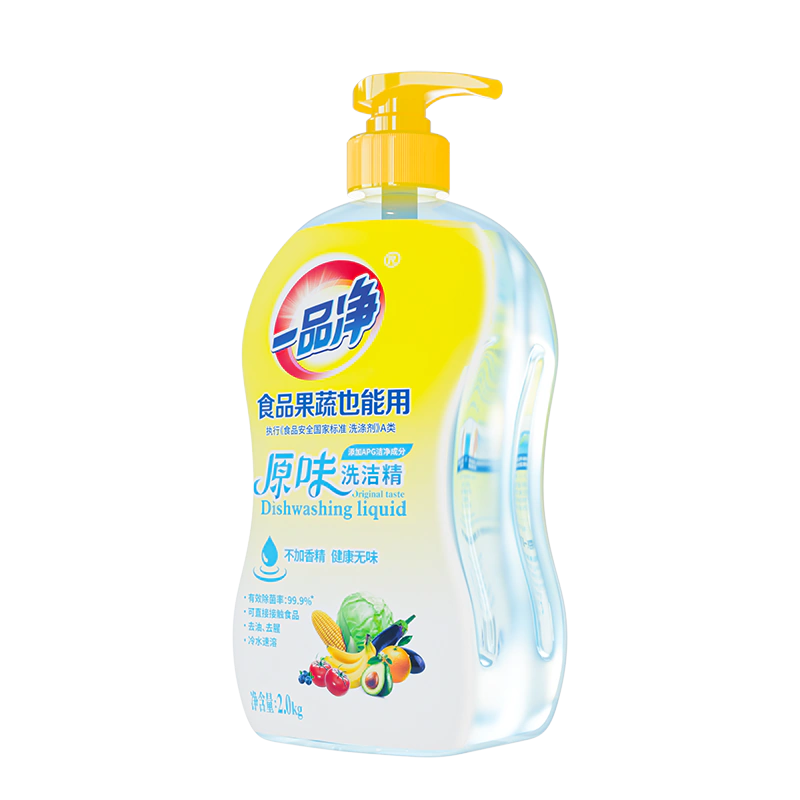
Yipinjing’s 2.0kg original dishwashing liquid is a dish-cleaning product. Its name, size and purchased packaging help identify the specific finished product. A product page does not, however, establish its legal classification, supply status in Ireland or whether documents have reached a particular professional user. Brand information, packaging labels and professional-supply documents need separate checks; none replaces the other two.
Teams actually supplying the relevant market and professional users can start with three checks: whether the order identifies the correct product, whether the link opens the current document directly, and whether the recipient receives it at the appropriate time. They can then address language, revisions and workplace access under the applicable conditions. This is an information-delivery management approach, not an endorsement of any brand’s compliance, certification or overseas availability.