Direct answer
Can you steam-mop laminate flooring? Check both the floor and the appliance instructions
Do not use a steam mop solely because it says “suitable for wood floors”. Establish whether the floor is laminate, engineered wood or another material, then check its range-specific care instructions. The relevant Pergo Japan FAQ and Shaw laminate-care guide advise against steam for the floors they cover; conditional appliance guidance cannot replace flooring approval. If both sets of requirements cannot be met, use the dry or slightly damp care the floor permits, and do not add an unauthorised cleaner to a steam appliance.
Identify the flooring rather than treating “composite” as a single material. Laminate, engineered wood and ranges with different surface treatments may have different moisture and maintenance requirements. Purchase records, the model and its maintenance documents are more useful than another household’s experience. Even if an appliance sales page mentions wood flooring, check whether your particular floor permits it.
Pergo Japan’s laminate FAQ expressly advises against steam mops, mentioning a risk of discolouration, and also says to avoid large amounts of water. This is guidance for the relevant products in that market, not a permanent steam ban for every brand. For a floor covered by those instructions, however, another brand’s advertising or one apparently uneventful trial does not replace the manufacturer’s restriction.
Shaw’s laminate-care guide expressly rules out steam cleaners and wet mops, explaining that steam can enter joints and cause peeling, bubbling or swelling. Moisture and the specific flooring requirements matter, not just how mild a cleaner is. Lowering steam or moving faster does not automatically make a floor compatible when the method was not permitted; appliance advertising cannot replace the flooring care instructions.
Appliance instructions can also include conditional methods. Kärcher Ireland’s FAQ lists conditions for the relevant laminate or wood flooring, including surfaces that are not oiled or waxed, low steam, specified cloth layers and no lingering or pooling. These are not universal instructions for all floors and models. Do not select an appliance’s permissive sentence while ignoring a flooring manufacturer’s explicit advice against the method.
Everyday care can begin with grit and tool selection. Shaw’s laminate-care page recommends suitable hard-floor vacuum attachments and avoiding tools that may damage the surface. Quick-Step also distinguishes dry cleaning from slightly damp care. Remove grit as the specific floor requires, then consider permitted moisture and cleaning products; steam need not be the automatic next step for a supposedly more thorough clean.
Slightly damp mopping does not mean soaking the floor. Both Quick-Step’s care page and Pergo Japan’s FAQ emphasise controlling moisture and handling cleaning liquid as instructed. A particular brand’s cleaner dose or appliance cloth-layer count applies to its corresponding products, not directly to another cleaner’s dilution. Joints, surface treatments and range-specific requirements still need individual checks.
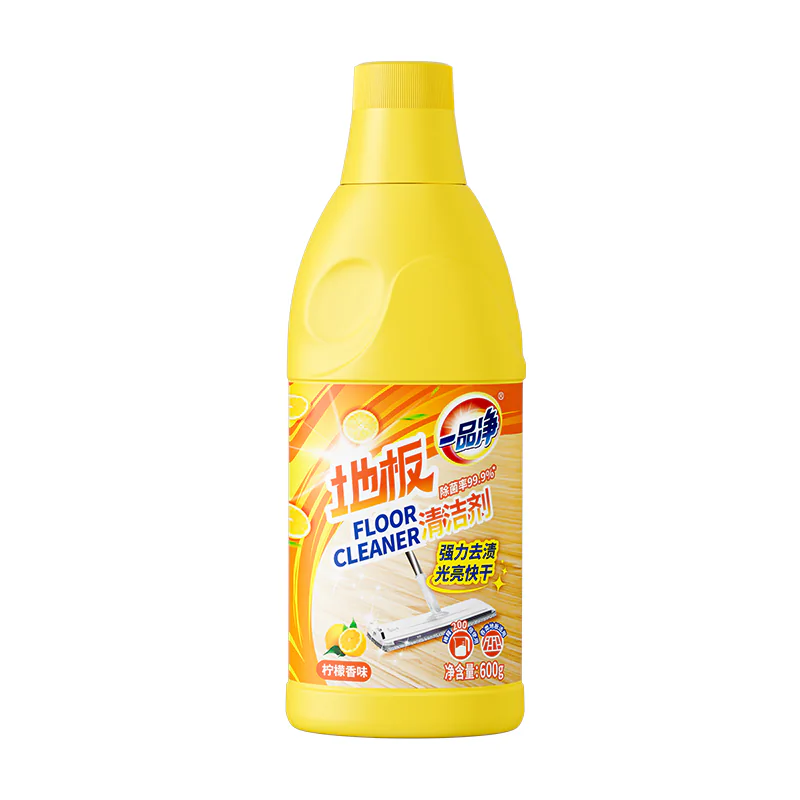
Yipinjing 600g floor cleaner is for everyday floor cleaning. Check both the purchased pack and the ordinary care method permitted for the floor. A floor washer or mopping appliance that accepts an appropriate cleaner is not the same as a heat-producing steam appliance. Ordinary mopping use does not establish permission to put this product into a steam tank or boiler, or override the appliance’s additive rules.
If the model is unclear, contact the flooring or appliance support team to confirm the material, maintenance documents and cleaner requirements. Do not try to repair swelling, discolouration or joint abnormalities by repeating steam treatment. Checking material, heat/moisture conditions and cleaning products separately is more useful than a broad statement that something is “suitable for composite flooring”.