Direct answer
Can microfiber cleaning cloths share a fabric-softener wash with clothes?
Do not put microfiber cleaning cloths that explicitly prohibit fabric softener into a wash or drying process using fabric softener or dryer sheets. Whether they can share a load with clothes depends on the cloth’s instructions: some models permit this, while others specify lint-free laundry. Identify whether the item is a cleaning cloth, mop pad or blended towel, then check for softening ingredients in the detergent. Follow each item’s washing temperature, bleach and drying instructions.
Fabric softener is not a universal additive that improves every textile. E-Cloth explains that deposits from softener and dryer sheets can interfere with the spaces between its microfibers; Rubbermaid’s commercial microfiber mop-pad instructions also advise avoiding softener. For tools that rely on fibre structure to pick up soil, care should preserve their cleaning function rather than prioritise softness or fragrance.
Products labelled microfiber can still differ. Vileda’s recycled microfiber cloth allows machine washing up to 60°C without fabric softener. Its Actifibre Soft Universal has a PU coating and also prohibits chlorine bleach and use on hot surfaces. These are model-specific conditions; the fibre name alone does not justify applying another cloth’s care method.
Separate the question of sharing a load from that of sharing a care programme. Vileda permits Actifibre Soft Universal to be washed with similarly coloured clothing. E-Cloth also permits washing with other laundry, but excludes combination detergents containing softener. Even where shared loads are allowed, a programme that adds softener does not meet these cloths’ requirements.
There is no single washing temperature for every microfiber item. Norwex’s lyocell-blend microfiber towels specify a gentle 30°C wash and low tumble drying. These body towels are not kitchen cleaning cloths, but illustrate how blends change care requirements. E-Cloth’s dusting products also have separate cool-water instructions; do not apply one cloth’s hot-water or boiling method to all towels and mop pads.
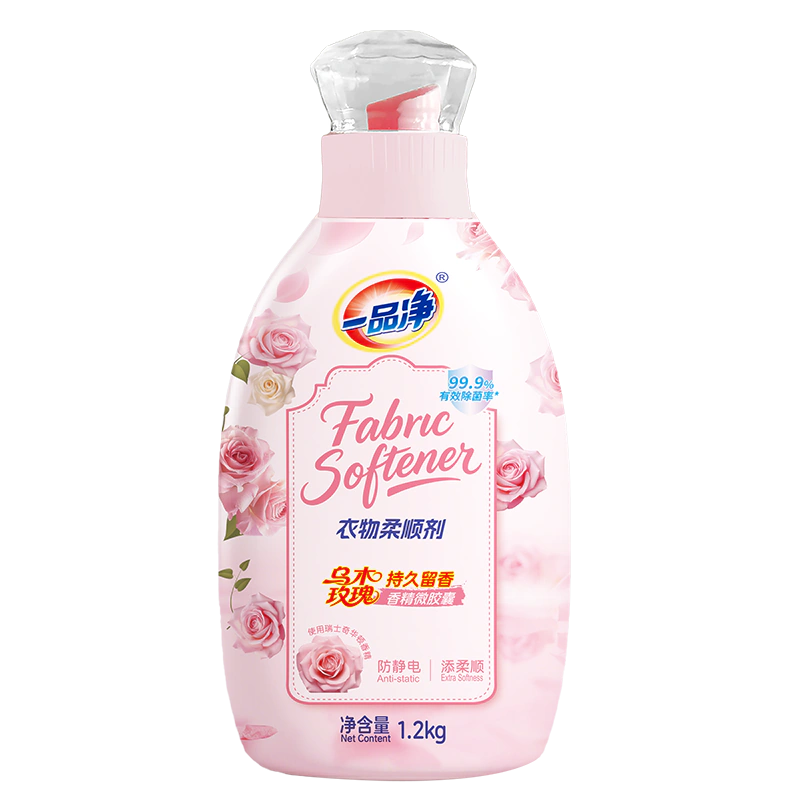
When choosing detergent, check for softening ingredients and the tool manufacturer’s instructions, not just whether the bottle says laundry liquid. E-Cloth recommends a small amount of detergent and avoiding products that combine detergent with softener. Yipinjing 1.2kg fabric softener is a post-wash treatment with a different role from detergent. Keep that treatment separate for cloths that expressly prohibit softener; it is not their cleaning product.
Drying and separation by task also matter. Rubbermaid recommends air drying or low tumble drying for its microfiber pads and using colours to distinguish areas or tasks. Vileda likewise describes separating kitchen and bathroom use by colour. One wash does not guarantee suitability for every setting; follow the specific tool’s wash and drying instructions.
If softener was added by mistake, look up that product’s recovery instructions. E-Cloth recommends promptly rewashing its products. This does not mean high temperatures or boiling will restore every microfiber item. Before the next load, check the permitted temperature and programme, whether the washing product contains softener, and whether the clothes need different care. Grouping items with compatible conditions is clearer than adding treatments at the last minute.