An implementation date has been set for the laundry fragrance-agent industry standard. Ministry of Industry and Information Technology Announcement No. 22 of 2026 approved 674 industry standards, including 107 light-industry standards. The announcement is dated 17 August 2026 and was posted on 1 September; its attachment lists 1 March 2027 as the implementation date for QB/T 8317—2026, Laundry Fragrance Agents. A Xinhua report on 8 September also covered the approval and implementation date.
Identify the product before deciding which standard to consult. The scope in the announcement’s attachment concerns laundry fragrance agents used alongside detergent during garment washing. Use alongside detergent is different from the washing function of laundry detergent itself. Words such as fragrance, essential oil or long-lasting scent in a product name are not enough to establish that it is a fragrance agent covered by this standard.
The attachment outlines appearance, odour, physicochemical indicators, performance, prepackage quantity, test methods, inspection rules, marking, packaging, transport, storage and shelf life. Businesses can use these topics to organise their reading and product information. Specific indicators, test conditions and assessment methods still require the formal standard text; an announcement summary alone cannot establish conformity.
The nature of a standard and the standard declared for a product are separate questions. Article 2 of the Standardization Law of the People’s Republic of China classifies industry standards as recommended standards, requires compliance with mandatory standards and encourages adoption of recommended standards. Article 27 also addresses disclosure of the numbers and names of standards a business implements and organising production and operations accordingly. The implementation date of a new industry standard therefore does not automatically add the same certification requirement to every laundry detergent or replace a product’s declared-standard information.
For fragranced laundry products, preparation can start with purpose and use: is the product a laundry detergent for washing, or a fragrance agent used alongside detergent? Then check the declared standard on the packaging, the directions and relevant technical information. Keeping these points separate helps avoid confusing fragrance marketing terms with a standard’s scope.
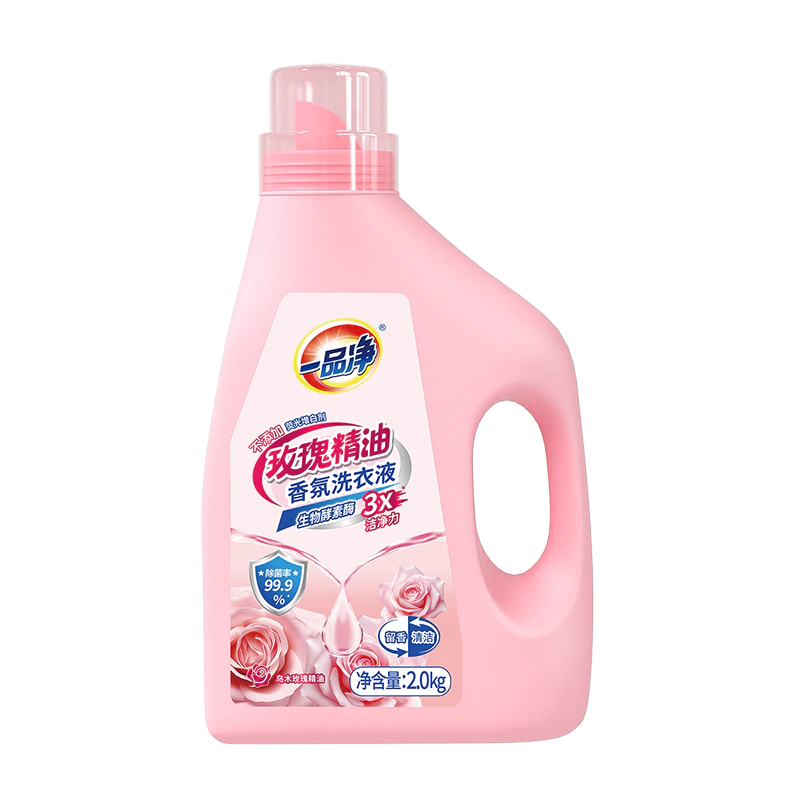
For example, the 一品净 product centre lists a 2.0kg rose-scent laundry detergent, a liquid laundry product. Buyers can consult its product page and purchased packaging for purpose, specification and directions. Whether a product belongs to another category requires its actual purpose and technical information, not just a fragrance-related name.
Before 1 March 2027, relevant businesses can check the formal standard, their existing declared standards and label directions against the actual product category. For consumers, keeping the purchased packaging instructions and choosing washing methods according to the label is more useful than relying on scent claims to identify a product category.