Direct answer
Rainbow marks on a washed stainless steel pan: is it still dirty?
Not necessarily. On uncoated stainless steel, rainbow colours may be heat tint caused by changes in the surface oxide layer during heating. Colour alone does not establish that detergent or food remains. Identify the material and model, let the pan cool, then wash, rinse and dry as instructed. Treat grease, white limescale and rainbow marks separately. Damaged coatings, corrosion or other abnormalities require assessment under the relevant cookware instructions, not uncoated-steel care methods.
Marks seen after washing are not all the same kind of dirt. Made In calls the rainbow effect on its stainless steel cookware heat tint and explains that high temperatures can change the surface oxide layer. This describes an appearance effect on its cookware, not permission to ignore every discolouration, spot or damaged surface. Identifying the mark is often more useful than repeatedly adding cleaner.
Normal washing is still necessary. All-Clad advises letting cookware cool, washing with warm soapy water and a sponge or soft cloth, then rinsing and drying promptly. Le Creuset also emphasises cooling and soft tools. Remove any grease or food according to the cookware instructions; the fact that some rainbow colours are an appearance change does not replace ordinary washing.
Grease, white hard-water marks and blue or rainbow colours may need different treatments. All-Clad lists these separately and describes wiping blue or rainbow colours with white vinegar and a sponge or soft cloth. It gives separate directions for white hard-water marks and burnt food. Do not transfer ratios, heating or soaking conditions from one set of instructions to another kind of mark.
Tools also depend on the brand and surface. ZWILLING discusses white or rainbow discolouration in its uncoated-cookware section and gives separate guidance for coated cookware. All-Clad and Le Creuset warn against steel wool, metal cleaning pads or strong abrasives. Check the requirements for your own pan; rough scrubbing permitted for another model is not a universal method.
If marks mainly appear after dishwasher cycles, check whether machine washing is permitted and which detergent is used. Le Creuset suggests trying a different detergent for slight discolouration of uncoated stainless steel after dishwashing; non-stick versions have separate care requirements. Hand dishwashing liquid and automatic dishwasher detergent have different uses and should not be interchanged simply because both clean dishes.
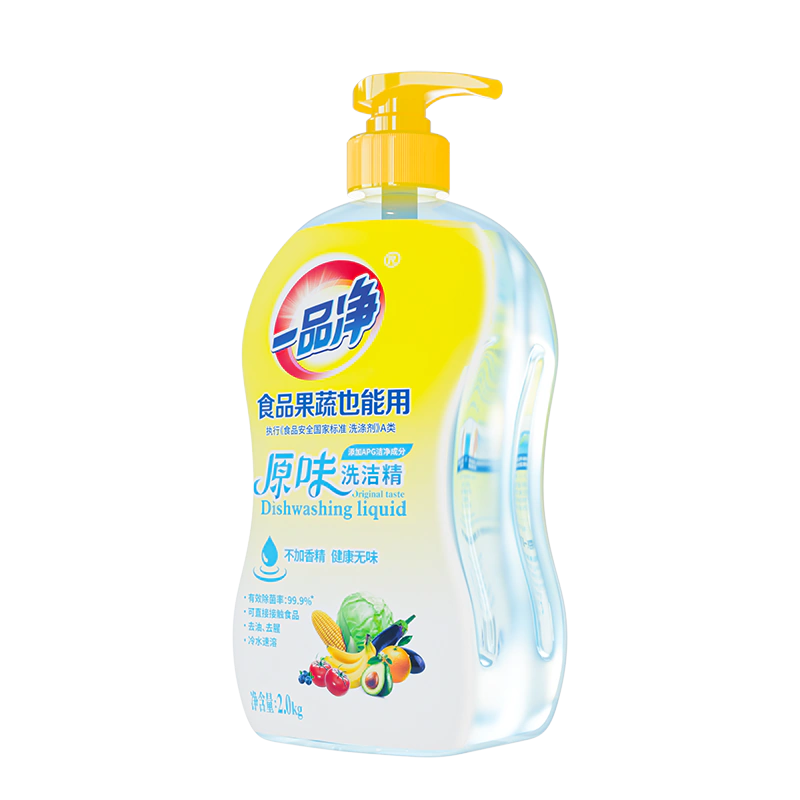
The everyday directions for Yipinjing 2.0kg original dishwashing liquid include applying it to a cloth to wipe tableware or cookware, followed by rinsing with clean water. When using it for ordinary handwashing, also follow the cookware material and care instructions. Removing ordinary grease and treating stainless steel heat tint are different tasks. Do not repeatedly increase the dose or use rougher tools just to obtain a completely uniform colour.
After targeted care, rinse and dry thoroughly as instructed. Made In calls for rinsing and thorough drying after treating heat tint with a soft sponge or cloth; Le Creuset also cautions against storing cookware wet for long periods. Checking cooling, suitable tools, ordinary washing, targeted care and drying separately is clearer than using the colour of the pan base alone to decide whether it needs washing again.