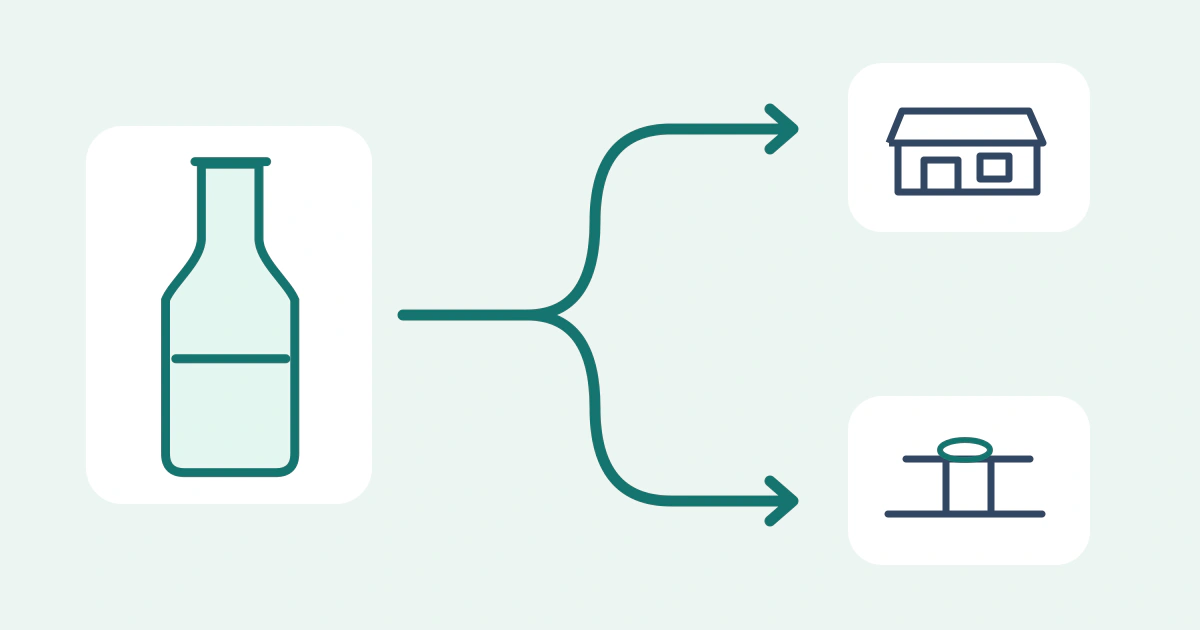
The UK Department for Environment, Food & Rural Affairs announced planned changes to the packaging extended producer responsibility scheme (pEPR) on 11 November and submitted a written statement to Parliament on 12 November. From April 2027, the government plans temporarily to stop classifying most glass drink containers supplied directly to licensed hospitality venues as household packaging. Eligible containers would no longer incur the scheme’s packaging waste disposal fees.
The plan concerns drink containers supplied directly to licensed venues such as pubs and restaurants. It does not cover all glass packaging or all packaging used by businesses. The date comes from the government’s announcement; the formal rules will govern implementation. Even if a type of packaging is no longer charged a disposal fee, that does not mean other packaging data reporting obligations disappear.
Why distinguish retail sales from direct supply when both use glass bottles? A retail drink bottle may go home with the customer, while packaging supplied directly to a hospitality venue may be used and discarded there. For packaging that directly contains a product, current UK guidance says that if a business or public institution receives it directly as the end user, suppliers need adequate evidence of its destination and that the packaging is not supplied onward. Collection by a commercial waste contractor does not in itself change its classification.
Cleaning products may also travel through different channels, but the glass drink container measure does not cover them. If a cleaner is sold through retail outlets as well as to hotels, hotel purchases alone do not make all of its packaging non-household. Where packaging passes through a wholesaler or another intermediary, the current guidance for this classification route looks at both whether the product is designed exclusively for business or public institution use and whether the packaging is unlikely to enter a household or public bin. The 2025 amendment took effect on 1 January 2026 and is separate from the measure planned for April 2027.
Packaging classification is also separate from recyclability ratings. The UK recyclability assessment methodology (RAM) requires large producers in scope to report recyclability ratings for relevant packaging. The rating may affect applicable fees, but it does not replace household or non-household classification. The November announcement also outlines future work to gather evidence on reusable packaging and study the fee structure; these are separate from the proposed change for direct hospitality supply.
When preparing packaging for the same cleaning product across channels, brands, packaging suppliers and manufacturers can keep separate material specifications and sales and delivery records for each channel, and identify the end users of the product and its packaging. An identical bottle design does not mean identical packaging flows, reporting classifications or fees. For UK reports, check each item against the rules that apply to the reporting period.