Direct answer
After washing wool knitwear with EPHYON Silk & Wool or Silk & Cashmere Detergent, how do I read flat, drip-flat, line and shade drying requirements?
Once a garment is clean, it is worth checking the label again for the final step. Washing instructions explain how to clean it; drying instructions tell you how to place it afterwards. Permission to machine-wash does not by itself mean you can put it straight on a hanger. ISO 3758 treats drying as a separate care category, and the U.S. FTC’s care-labelling guidance also addresses drying as a distinct part of the instructions.
First distinguish how the garment should be positioned. GINETEX’s natural-drying chart lists line drying, drip line drying, flat drying and drip flat drying separately. The first two involve hanging; the latter two involve laying the garment flat. These are not four interchangeable descriptions. If a small care symbol is difficult to recognise, compare it with GINETEX’s care-symbol chart and check any written instructions supplied with the garment.
Flat drying and drip flat drying also need to be read separately. When a label specifies a flat position, do not overlook whether it also says to drip dry. Whether water should first be removed, and how it may be handled, depends on that garment’s complete instructions—not on the spin-drying routine used for another item. In particular, do not turn different drying instructions into the same spin speed or squeezing action.
Next check the location conditions. A diagonal line in a natural-drying symbol means the specified method should be carried out in the shade. Both flat and line drying can therefore carry a shade requirement. Moving something into the shade does not replace its positioning instructions: if the label requires flat drying, moving a hanger to a shaded spot is still a different method.
Why does support matter particularly for wool knitwear? Woolmark explains that when wet knitwear is hung up, the weight of the water it holds may stretch it and distort its original shape. The issue is the garment’s structure and wet weight, not just sunlight. Supporting the body of a garment horizontally is different from leaving its full wet weight on a hanger.
When flat drying is appropriate under the care label, Woolmark suggests a pale-coloured, lint-free towel or a drying mesh screen suitable for supporting the garment horizontally. Gently reshape it to its original shape and size, smoothing out obvious folds, and let it dry naturally. Do not try to speed things up by draping wool knitwear over a radiator or placing it close to a direct heat source; the guide also advises avoiding direct sunlight.
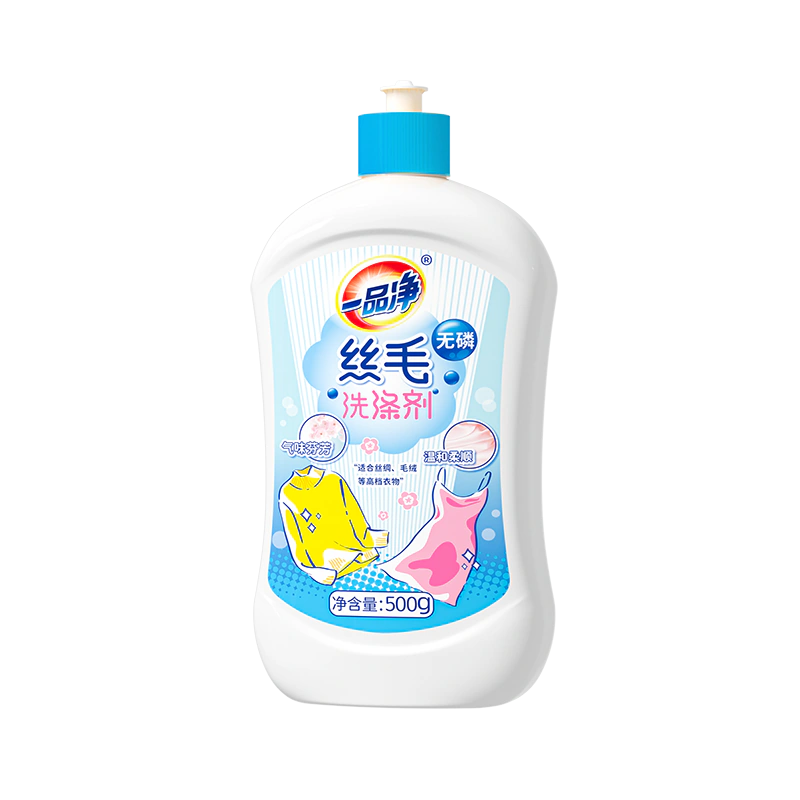
Read the product directions alongside the garment label. EPHYON’s 500 g Silk & Wool Detergent is a liquid product whose directions say to air dry after rinsing; the particular drying method still needs to follow the garment label. EPHYON’s 408 g Silk & Cashmere Detergent comes in a 350 g + 58 g bottle, and its directions specifically recommend laying garments flat to dry and warn against exposure to strong direct sun. Follow the instructions for the product you have, together with those for the garment, rather than treating the wording for the two products as identical.
Wool does not mean one drying method for every garment. In the same guide, Woolmark distinguishes knitwear from woven garments such as suit trousers and jackets, for which hanging may be appropriate. If a wool garment’s care label expressly allows another method, follow those directions. Advice to dry a wet knitted jumper flat is not a blanket ban on hanging every wool item.
For the steps before drying, see the guides ‘Can EPHYON 500 g Silk & Wool Detergent be used for machine washing?’ and ‘How to use EPHYON 408 g Silk & Cashmere Detergent’. After washing, start this decision with the label’s drying section: identify flat or line drying, check drip-drying and shade requirements, then prepare the corresponding support and location.
If the care label is worn, a symbol is unclear, or the garment instructions and product advice raise questions, ask the clothing brand to confirm the specific drying method first. Even after choosing a specialist detergent, the garment’s own care instructions still need to guide its positioning, reshaping and drying location.