Direct answer
Can a hot pan go straight under cold water? Cool it first, then clean for its material
Do not rinse or soak a pan straight from the heat in cold water. Let it cool according to its instructions, then choose water temperature, dishwashing liquid and soft tools suited to its material. Sudden cooling may warp the base or damage coatings, and glass lids also need protection from abrupt temperature changes. There is no single waiting time in minutes for every pan; do not touch hot cookware to test its temperature. Stop use and contact service if unusual wobbling, cracks or coating damage appear.
When clearing up after cooking, distinguish “off the heat” from “ready to wash”. Tefal warns that plunging a hot pan into cold water or putting it under a cold tap can cause warping through thermal shock. All-Clad also requires cooling before cleaning. Do not pour cold water suddenly into a still-hot pan just to make it cool faster.
How long to wait depends on the cookware instructions and its condition. Material, thickness, size and recent heating differ, so one waiting time is unsuitable for all pans. Le Creuset’s stainless-steel section requires complete cooling before washing, while other sections have their own scope. Do not touch the bottom with a bare hand to test it; handle still-hot handles and lids safely as instructed too.
Identify the material before choosing tools. All-Clad recommends warm, soapy water and a soft sponge or cloth for the relevant non-stick ranges, avoiding harsh cleaners and abrasives that can damage surfaces. Le Creuset likewise calls for suitable non-stick cleaning pads rather than metal or abrasive products. A stain-removal method for bare metal cannot simply be transferred to a non-stick coating or enamel.
Do not clean only the inside. Tefal recommends cleaning the outside and bottom as well; All-Clad’s everyday care includes rinsing and drying to reduce water spots. Check separately whether a cleaning liquid suits the inner coating, exterior finish and handle. Burnt-on marks underneath are not a reason to scrub harder with steel wool or mix several cleaners.
Pay separate attention to glass lids. GreenPan warns that plunging hot cookware into cold water can warp the pan and shatter a glass lid. Let the lid cool according to its instructions too, rather than placing it in cold water while very hot. Not every temperature change produces the same damage, but a previous incident without damage does not justify repeating sudden cooling.
A base that is not perfectly flat is not necessarily damaged. GreenPan’s support page distinguishes designed base concavity from unusual wobbling and identifies drastic temperature changes as one possible cause of warping. Slight visible concavity alone is not a reason to condemn every pan. Stop use if it becomes clearly unstable, cracks or develops coating abnormalities; send the model’s service team photos instead of hammering or heating the base to straighten it.
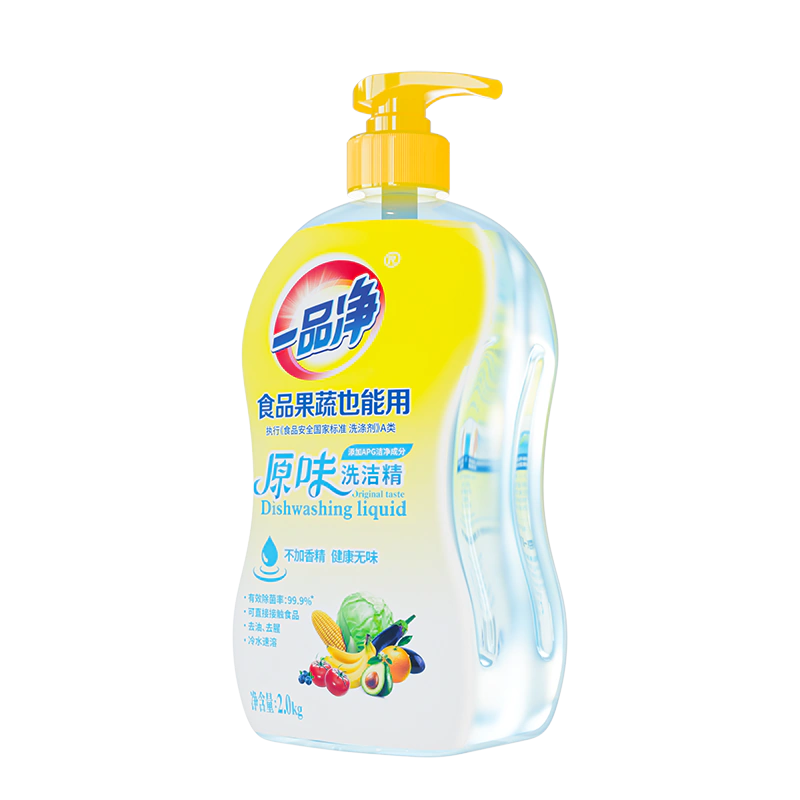
Yipinjing 2.0kg original dishwashing liquid is for dish cleaning. Once a pan has cooled, if its manufacturer permits hand-washing with dishwashing liquid, check the purchased pack too, choose soft tools suited to the surface, rinse and dry. A cleaner removes everyday dirt; it will not restore a warped base or damaged coating and does not replace the cookware’s care instructions.
Dishwasher permission still depends on the specific range. All-Clad’s instructions differ across material sections, and permission for relevant GreenPan products cannot be applied to another brand. A practical sequence is to cool, identify the material and care instructions, clean by an allowed method, rinse, dry and inspect for abnormalities. Ask service about uncertain damage instead of trying ever-stronger cleaning methods.