On 5 November 2026, the Court of Justice of the European Union explained in Case C-395/25, Orkla Care, how to assess hazardous chemical packaging that resembles food packaging. For the cleaning-products industry, the ruling highlights that packaging development involves more than checking whether a label says “laundry detergent”. It must also consider the container’s overall appearance and whether people can still identify the product correctly after it has been taken home, opened and used repeatedly.
The case concerns nine chemical products, mainly laundry detergents, sold in coloured cardboard cartons in Sweden. The Swedish Chemicals Agency prohibited their marketing because the packaging resembled food containers, and the company challenged that decision in court. The EU Court answered questions about interpreting EU rules; the Swedish courts remain responsible for resolving the national dispute. This is not a blanket EU ban on detergents in cardboard cartons.
Assessment considers characteristics consumers can perceive, rather than isolating a material or illustration. The Court lists shape, size, volume, design, colour, labelling, materials, texture and smell, calling for a case-by-case assessment of the overall impression. The same paper material can serve different designs. Neither the use of cardboard nor the presence of a product name alone settles whether there is a risk of confusion.
A seal present before first use cannot replace identification throughout the product’s lifespan. The ruling explains that a seal removed on first use cannot be treated as a decisive, permanent change to the packaging’s impression if it no longer remains intact. A warning not to swallow the contents likewise does not automatically remove confusion caused by appearance. Packaging and labelling need to work together, rather than cancelling each other out.
Protection is not limited to adults who carefully read the label when buying. Children, vulnerable people and others who may encounter the product after purchase also matter. Assessment must consider food packaging familiar to the public in the national market. Authorities need not first prove that the same design would cause identical confusion in every Member State, or wait for an actual case of confusion before addressing a non-negligible risk.
For projects entering the EU market, classification is the starting point for hazard communication and packaging requirements. The Swedish agency’s CLP explanation and Ireland’s HSA packaging guidance both connect appropriate classification, labelling and packaging. Brand and manufacturing teams should examine these requirements together when identifying the target market, formulation classification and packaging design. A design or a foreign news report does not establish that a particular product has received compliance approval.
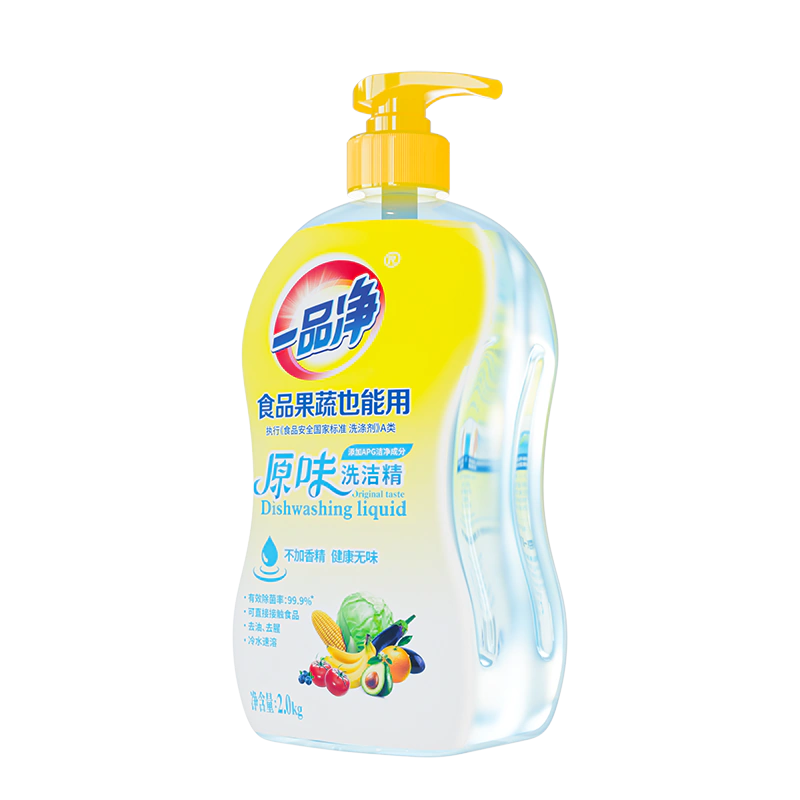
Clear product identity also matters during household use. The HSA advises following storage instructions, not transferring chemicals casually into other containers and not storing them near food. Yipinjing’s 2.0kg original dishwashing liquid is intended for dish cleaning; its packaging says it must not be consumed and should be kept out of reach of children and pets. Retain identifying labels and check the purchased packaging, rather than treating cleaning products as food or drink.
The industry significance of this ruling is that packaging identification extends beyond the shelf into continued household use. Reviewing the container, label, closure and opened condition together can help identify problems that prominent words or a disposable seal alone do not resolve. Specific market decisions still depend on the applicable rules and actual product. An interpretation in one case is not a universal conclusion about every material and cleaning product.